
Steam phosphating and passivation – economical and process-reliable
The combination of steam phosphating and passivation offers a cost-effective and efficient way for the pretreatment of metallic surfaces. With the help of saturated dry steam, functional conversion layers can be created, which significantly improve corrosion protection and adhesion for the subsequent processes such as painting or coating. The entire procedure is simpler, faster and involves lower operating costs compared to conventional methods.
Functioning of steam phosphating
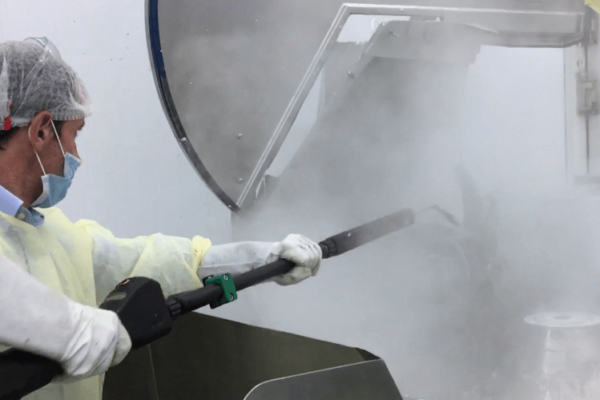
In the classic method, degreasing is followed mostly by several rinsing, dipping and drying steps in order to apply phosphating or passivation layers. These processes are time and resource-intensive. In steam phosphating, the phosphate or passivating agent is applied directly to the surface using hot steam. Steam serves as a transport medium and simultaneously activates the chemical reaction through pressure and temperature. The phosphate crystals bind purposefully to the metal surface and create a rougher structure that enables better adhesion for subsequent layers.
Advantages of the process
• Fewer process steps compared to classical phosphating bath
• Separate dip tanks, rinsing stations or drying facilities are not required
• Lesser energy and chemicals consumption
• Fast drying due to low residual moisture
• Reduced investment and operating costs
• Compact solution for the system without large space requirements
• Can be integrated well in existing cleaning or production lines

Improving surface properties
The phosphate or passivation layers produced by steam improve, among other things:
• Corrosion resistance
• Paint adhesion
• Mechanical adhesion in case of caulking or coating processes
Typical areas of use
• Pretreatment of components in automobile manufacture and machinery construction
• Surface preparation for powder coating
• Use in coil and sheet metal processing
• Use for steel and aluminium components